
Qingdao, China – September 21, 2026 – An Aerial Work Platform Outrigger Cylinder is not simply used to push an outrigger outward. Before an aerial work platform stops travelling and begins elevated operation, the machine needs to change from a condition supported mainly by the travel chassis to one in which the outriggers participate in the working foundation. The outrigger cylinder is an important hydraulic component in this transition.
Before the support foot reaches the ground, the cylinder mainly moves the mechanism. After ground contact, its task changes, and part of the machine load begins to pass through the outrigger to the ground. The four cylinders can extend and retract independently with single-point fine adjustment, adapting to uneven ground on construction sites. Because of this, cylinder stroke, mounting position, holding capability, and the surrounding mechanical structure can all affect the actual working condition of the machine.
The Role of the Aerial Work Platform Outrigger Cylinder Starts Before the Platform Rises
When an aerial work platform is travelling, the machine weight is mainly transferred to the ground through the wheels, tracks, and chassis. This structure is suitable for movement, but once the platform begins to rise, the center of gravity and load condition of the machine also change.
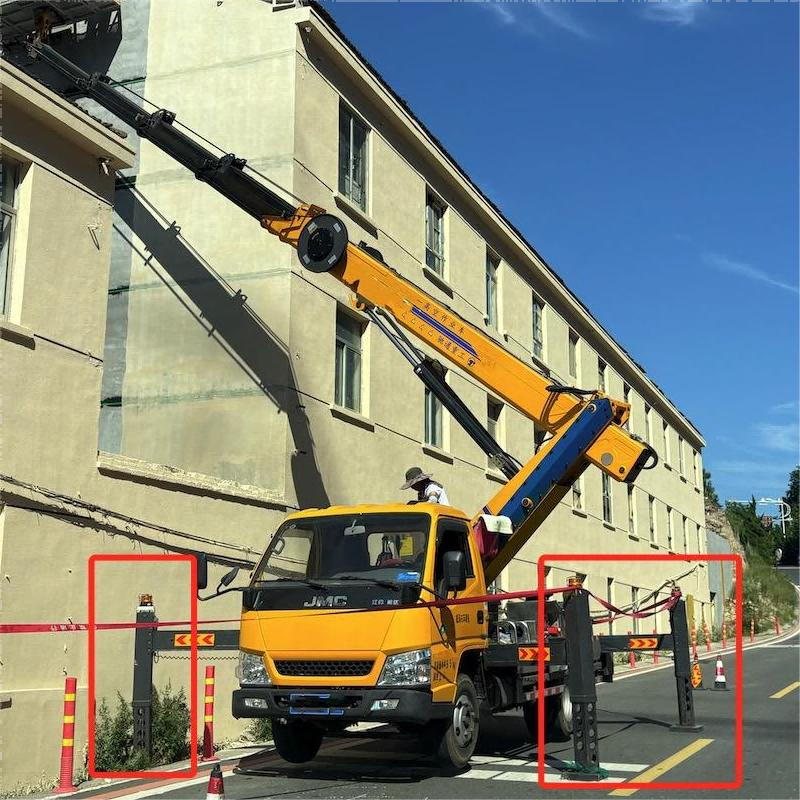
After the outriggers are deployed, the way the machine contacts the ground changes. The Aerial Work Platform Outrigger Cylinder moves the outrigger mechanism toward the required position, allowing the support foot to reach the ground and gradually participate in load transfer.
For this reason, whether the cylinder is really doing its job cannot be judged only by whether it extends. What matters more is whether the outrigger reaches the required position, whether ground contact is reliable, and whether the machine load can be transferred along the intended path.
Ground Contact Is the Point Where the Cylinder’s Working Condition Changes
Before the support foot reaches the ground, the cylinder mainly overcomes the weight of the outrigger itself, pin friction, and mechanical resistance. This stage is closer to an ordinary deployment movement.
After ground contact, the situation changes. As the cylinder continues to move, the outrigger begins carrying part of the machine weight, and the ground provides a reaction force. At this point, the cylinder has changed from simply moving a mechanism to becoming part of the machine’s load path.
This is also why ground conditions cannot be ignored. Even if the cylinder can provide enough force, soft ground, local settlement, or poor contact between the support foot and the ground can still affect the actual result. A reliable working condition depends on the cylinder, outrigger mechanism, support foot, and ground working together.
Loads on the Outriggers Change as the Platform Moves
After the outriggers are deployed, the loads at different positions do not remain fixed.
When the platform is low, the machine’s center of gravity is usually closer to the center of the chassis. As the platform rises, moves to one side, or carries operators, tools, and other working loads, the center of gravity also changes. The outrigger closer to the load direction may therefore carry more force, while the load on the opposite side may decrease.
This means the outrigger cylinder does not work under one constant load. Platform height, working radius, upper-structure position, outrigger spacing, and ground slope can all change the actual working condition of the cylinder.
For this reason, judging whether an Aerial Work Platform Outrigger Cylinder is suitable based only on total machine weight is not enough. It is more meaningful to consider how the load changes under real operating positions.
A Level Machine Does Not Always Mean the Load Is Properly Distributed
Outrigger cylinders are often associated with leveling, but keeping the machine level and maintaining a proper load condition are not exactly the same thing.
A machine can appear level while one side carries much more load than another. Likewise, even if the platform remains level, poor contact between one support foot and the ground can still affect the overall condition.
For an aerial work platform, the key point is not only to bring the machine to a certain angle, but also to keep the outriggers in their intended positions throughout the work cycle.
If one cylinder slowly retracts because of internal leakage, the movement may be difficult to notice at first. Over time, however, the original load relationship can gradually change. This is why the ability to hold position after reaching the working position is also part of actual cylinder performance.
Why Can the Same Stroke Produce a Different Outrigger Position?
An Aerial Work Platform Outrigger Cylinder usually does not push the support foot vertically in a direct line. Instead, it often moves the outrigger through pins, pivot arms, or linkage structures.
This means cylinder movement does not always equal support-foot movement. The mounting position and mechanism geometry convert the cylinder stroke into a different movement path.
For example, even if a replacement cylinder has exactly the same stroke as the original one, a small difference in retracted length may change the starting position of the outrigger. If the total extended length is different, the final ground-contact position may also change.
This effect can be more obvious with long outriggers or pivoting structures. A small dimensional difference at the Cylinder End can become a larger positional difference at the end of the outrigger.
Therefore, when replacing an outrigger cylinder, the real goal is to reproduce the original movement relationship rather than simply finding a cylinder with the same stroke.
A Larger Cylinder Does Not Automatically Produce a Better Working Condition
A larger bore can provide greater theoretical force at the same pressure, but this does not mean an aerial work platform will automatically become more stable.
If the original hydraulic system was designed around a specific cylinder, changing the bore may affect movement speed. If retracted length, extended length, or mounting position changes, the actual outrigger path may also change. Greater cylinder force can also increase the load on the existing outrigger structure, pins, and mounting areas.
For this reason, a larger outrigger cylinder is not always better. A more reasonable goal is to keep cylinder force, movement range, and the original mechanical structure properly matched so that the outrigger can reach the correct position and maintain that position during operation.
Uneven Wear May Come From Outside the Cylinder
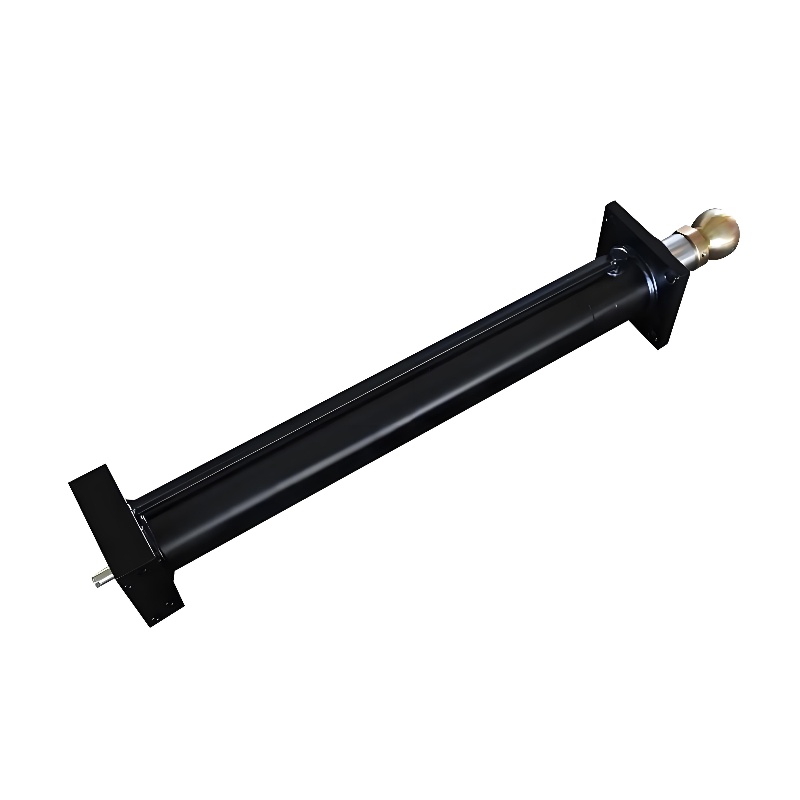
Hydraulic Cylinders are mainly designed to carry axial force. If the outrigger mounting point is misaligned, the pins are worn, the structure is deformed, or the support foot contacts the ground at an unsuitable angle, the rod may be exposed to additional lateral force.
This side load increases friction between the rod, seals, guide components, and Cylinder Head. Over time, it may lead to local wear, reduced seal life, or less smooth cylinder movement.
Therefore, if an outrigger cylinder repeatedly shows uneven wear or abnormal movement, checking only the inside of the cylinder may not identify the real cause. The mounting position, pin connections, outrigger structure, and ground-contact condition should also be considered.
The Outrigger Must Also Return Correctly After the Work Is Finished
The complete operating cycle of an Aerial Work Platform Outrigger Cylinder does not end when elevated work begins. After the work is completed, the outrigger must return to its stored position so that the machine can move again.
This means a suitable cylinder must meet the movement requirements in both directions. If the retracted length is incorrect, the outrigger may not return fully to its original position. If the extended position is different, the ground-contact position may also change.
For a replacement project, both end positions need to match the original mechanism. Only then can the outrigger complete the full cycle of deployment, ground contact, load carrying, position holding, and retraction.
Micro Precision Machinery and Aerial Work Platform Outrigger Cylinder Projects
Micro Precision Machinery provides hydraulic cylinders, hydraulic Valve Blocks, hydraulic manifolds, hydraulic parts, and precision-machined components.
For an Aerial Work Platform Outrigger Cylinder replacement or custom project, existing drawings, physical samples, machine photos, and installation positions can be reviewed together. In addition to bore, rod diameter, and stroke, retracted length, extended length, pin dimensions, mounting width, port position, and actual working pressure should also be considered because these factors together determine whether the new cylinder can reproduce the original outrigger movement relationship.
For projects without complete drawings, existing samples and machine installation information can also be used to further analyze the original structure.
Send your Aerial Work Platform Outrigger Cylinder drawing, physical dimensions, or machine installation photos to Micro Precision Machinery to discuss a cylinder solution for the actual equipment.
Conclusion
An Aerial Work Platform Outrigger Cylinder is not simply a hydraulic cylinder that extends and retracts. Before the platform rises, it moves the outrigger into the working position. After ground contact, it participates in machine load transfer and needs to maintain its position throughout elevated operation. Meanwhile, it is generally equipped with hydraulic locks. In the event of a burst pipeline, the locks engage to prevent outrigger retraction and collapse.
The actual performance of the cylinder depends on the relationship between stroke, mechanism geometry, ground contact, load changes, position holding, and mechanical alignment. For replacement or custom projects, reproducing the original movement and load relationship is more valuable than matching only a few individual dimensions.
FAQWhat Is the Main Function of an Aerial Work Platform Outrigger Cylinder?
It moves the outrigger mechanism into the working position and participates in machine load transfer after the support foot reaches the ground.
Why Can Outrigger Cylinders With the Same Stroke Perform Differently?
Differences in retracted length, mounting position, pin dimensions, and outrigger geometry can all change the starting and final positions of the outrigger.
Why Can an Outrigger Cylinder Experience Side Load?
Misaligned mounting points, worn pins, structural deformation, or an unsuitable support-foot angle can apply additional lateral force to the cylinder rod.
What Information Is Needed When Replacing an Aerial Work Platform Outrigger Cylinder?
Useful information includes bore, rod diameter, stroke, retracted and extended length, mounting dimensions, pin size, port position, working pressure, existing drawings or samples, and machine installation information.
About us
Established in 2006, Qingdao Micro Precision Machinery is a manufacturer specializing in hydraulic cylinders, hydraulic components, hydraulic manifolds, valve blocks and CNC machining parts, guided by a service mindset prioritizing customer responsibility. We supply premium products and services to world-renowned brands including Sandvik, Lemken and Kubota, covering construction, agricultural and mining machinery sectors.
Media Contact
Company Name: Qingdao Micro Precision Machinery Co., Ltd.
Contact Person: Media Relations
Email: Send Email
Phone: +86-15589891818
Address:No. 438, Wangsha Road, Chengyang District
City: Qingdao
Country: China
Website: https://www.mpmmachine.com/
Press Release Distributed by ABNewswire.com
To view the original version on ABNewswire visit: Aerial Work Platform Outrigger Cylinder: What Does It Change Before Elevated Work Begins?


