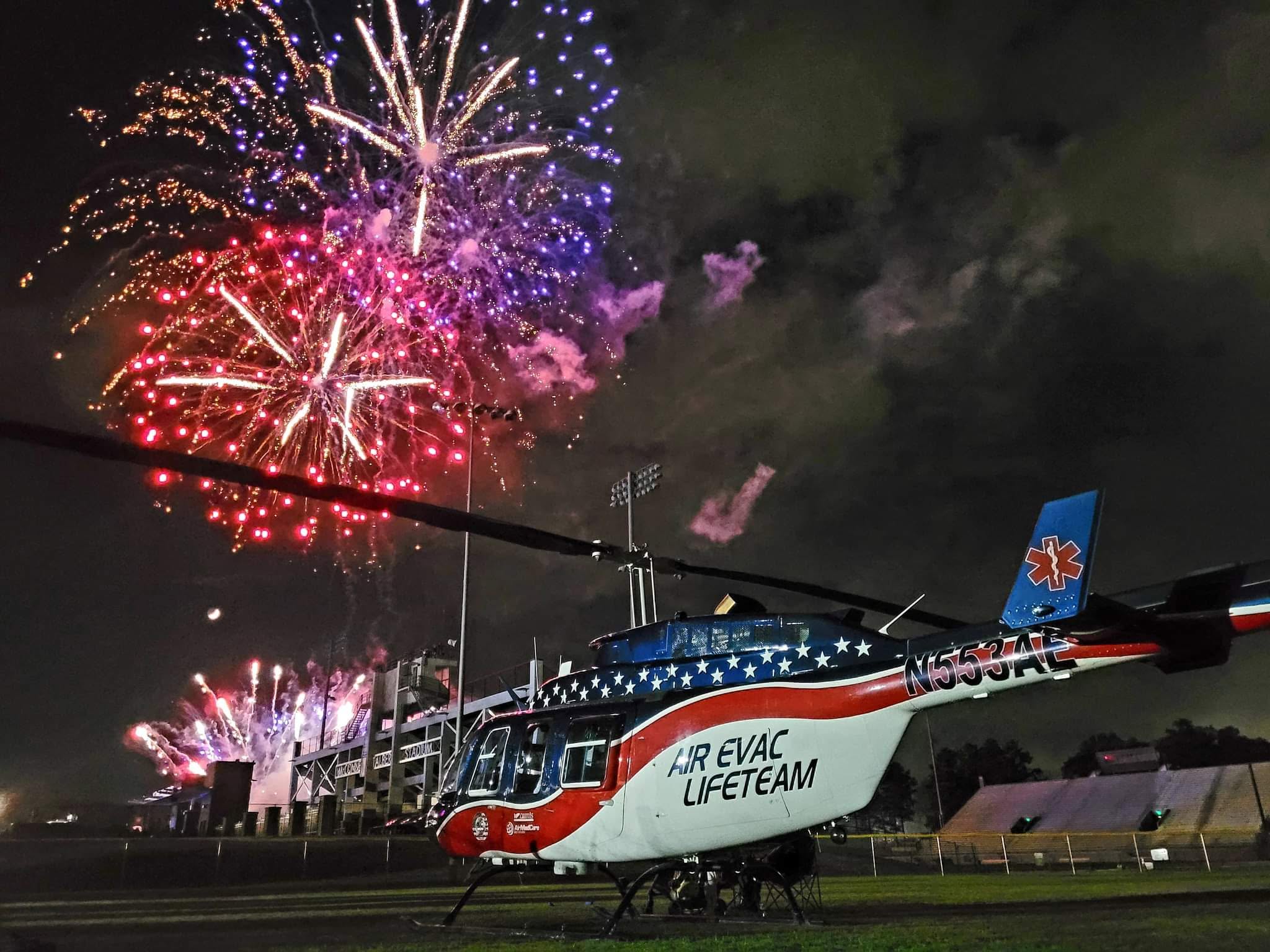
July 4 and July 5 topped all other days in 2025, reflecting the combined risks of travel, recreation, fireworks, alcohol use and summer heat
LEWISVILLE, CO, UNITED STATES, July 2, 2026 /EINPresswire.com/ — As Americans prepare to celebrate Independence Day, analysis from Global Medical Response (GMR), the largest air and ground emergency medical service provider in the United States, reveals that July 4 is the busiest day of the year for GMR’s air medical providers, followed closely by July 5, underscoring the significant demand for emergency care during one of the nation’s most active holiday periods.
“In more than 40 years as a flight nurse, I’ve responded to many serious burn injuries around the Fourth of July, often involving the hands and face,” said Phil Kolkow GMR’s longest-serving flight nurse. “Too often, these injuries are tied to explosions where celebrations and alcohol don’t mix.”
In July, trauma cases represent a majority of air medical responses across the country. “We also see the consequences of crashes, falls, boating incidents, heat exposure, increased alcohol consumption and delayed calls for help,” adds Kolkow. “The common thread is that many of these emergencies escalate because people underestimate the risk until it becomes serious.”
WHY TRAUMA LEADS THE HOLIDAY CALL MIX
*Trauma-related calls can increase around the holiday because people are more likely to be:
*Driving longer distances or traveling on unfamiliar roads.
*Using recreational vehicles such as motorcycles, ATVs, or personal watercraft.
*Participating in water or remote-area recreation, including boating, swimming and diving.
*Handling fireworks or standing too close to fireworks activity.
*Climbing, grilling, camping, or gathering outdoors.
*Using alcohol & recreational drugs, which can impair judgment, balance and reaction time.
THE HIDDEN HOLIDAY RISK: HEAT, DEHYDRATION AND CARDIAC EVENTS
While traumatic injuries and burns often get the most attention around the Fourth of July holiday, conditions such as heat exhaustion, heat stroke, cardiac events and stroke can escalate quickly — especially when people delay calling for help or mistake early warning signs for fatigue, intoxication or “just the heat.”
“We know these medical emergencies are often driven by several factors happening at once — extreme heat, dehydration, increased physical activity and the use of drugs and alcohol,” said GMR Chief Medical Officer Dr. Ed Racht. “For people with underlying health conditions, that combination can place added strain on the body and increase the risk of a serious event. The good news is that many of these risks can be reduced. Staying hydrated, pacing outdoor activity, taking breaks from the heat and being mindful of alcohol intake can make a meaningful difference, especially during extreme temperatures.”
WHAT EMERGENCY CLINICIANS WANT YOU TO KNOW
Many people recognize obvious signs of trauma, such as severe bleeding, burns, or broken bones. But during holiday gatherings, the warning signs of stroke, heart attack or heat-related illness can be easier to miss.
Dr. Racht adds, “Time matters in any emergency. If symptoms are sudden, severe, or don’t seem right, call 911. Waiting to see if they improve can cost valuable time.”
WHAT TO WATCH FOR: CALL 911 RIGHT AWAY IF SOMEONE HAS:
*Sudden weakness, numbness or drooping in the face, arm or leg, especially on one side of the body.
*Sudden confusion, trouble speaking, slurred speech or difficulty understanding what others are saying.
*Sudden trouble seeing, dizziness, loss of balance, trouble walking or a sudden severe headache with no known cause.
*Chest pain, pressure, squeezing, fullness or discomfort that lasts more than a few minutes or comes and goes.
*Pain or discomfort spreading to one or both arms, the back, neck, jaw or stomach.
*Shortness of breath, cold sweat, nausea, unusual fatigue, lightheadedness, fainting, or a rapid or irregular heartbeat.
*The Alcohol Factor: Not the Whole Story, But an Important Risk Multiplier
ALCOHOL SHOULD BE VIEWED AS A RISK MULTIPLIER
“Alcohol does not have to be the cause of an emergency to make the emergency worse,” adds Racht. “It can affect decisions before the incident, delay the decision to call 911 and make it harder for bystanders to recognize whether someone is intoxicated, overheated or experiencing a medical emergency.”
FIVE WAYS TO STAY SAFE THIS 4TH OF JULY WEEKEND
*Make a transportation plan before celebrations begin. If alcohol is part of the festivities, arrange a sober ride before the first drink.
*Stay hydrated throughout the day. Drink water consistently and take breaks from the heat, especially during outdoor activities.
*Practice water safety. Wear life jackets, supervise children closely, and avoid mixing alcohol with boating or swimming.
*Use fireworks responsibly. Keep a safe distance, follow instructions, and leave large displays to professionals whenever possible.
*Don’t ignore warning signs. Whether it’s a serious injury, sudden weakness, confusion, or difficulty speaking, seek help immediately when something doesn’t seem right.
After more than four decades responding to emergencies from the air, this Fourth of July holiday will be Kolkow’s last before he retires in the days that follow. “These are split-second decisions that can have a lifelong impact,” Kolkow said. “Accidents happen, but they don’t always come with a second chance. This is a big holiday — take care of yourself and the people around you so everyone gets home safely.”
Kirsten Gurmendi
Global Medical Response
+1 303-870-9953
kirsten.gurmendi@gmr.net
Legal Disclaimer:
EIN Presswire provides this news content “as is” without warranty of any kind. We do not accept any responsibility or liability
for the accuracy, content, images, videos, licenses, completeness, legality, or reliability of the information contained in this
article. If you have any complaints or copyright issues related to this article, kindly contact the author above.

Media gallery